


Blog
Central Scotland – the Heart of the Country
This article looks at Central Scotland – its history, the part of the country it covers, whether you are looking at a narrow or a general definition of the term. There are also sections on the main population centres in the region, including some of the smaller cities and larger towns, alongside Glasgow and Edinburgh.
This article is a three- to four-minute read.
Say ‘Scotland’ and many people will think of the Highlands, its Islands, and the stunning scenery. But while Central Scotland is a much smaller part of the country, in many ways it is far more important. Here Hamiltons Removals look at what area is covered by the term, its history, and how we can help you move there, whichever city, town or village you are interested in.
Removals to Central Scotland with Hamiltons Removals
At Hamiltons Removals, we can help with domestic and commercial moves to all parts of Scotland. For more information, call us on 01379 855203.
The History of the Term ‘Central Scotland’
The area of Central Scotland was first inhabited by ancient tribes such as the Picts. It used to be known as the Midlands or Scottish Midlands, but these terms have now fallen into disuse.
These days, the region is more commonly known as the Central Belt, and there’s a larger and a smaller one of these. Whichever term you are using, though, the important fact to remember is that Central Scotland isn’t in the centre of the country – it’s slightly lower, or further south, than that. The exact geographical centre of Scotland is actually in the Highlands, near Newtonmore.
So Where Is It?
The larger Central Belt’s northern boundary runs roughly from Helensburgh in the west to Montrose in the north-east. The southern boundary extends down to the Southern Uplands Fault, running roughly from Girvan to Dunbar. Overall, the belt is basically a trapezoid shape.
It includes fairly densely populated regions such as Ayrshire and East Lothian, and includes all the major cities of Scotland, except for Aberdeen and Inverness, which are further north.
The smaller Central Belt is the triangle defined by the M8, the M80 and the M9 motorways from Glasgow and Greenock in the west, to Edinburgh in the east. This is also referred to as the Lowland Triangle.
Moving to Central Scotland – the Big Cities…
It may not have the scenery of the Highlands and Islands (although this should be a short drive away), but Central Scotland does include most of the major population centres in the country. Around 4.2million people live in the region, out of a total Scottish population of 5.5million.
So removals to central Scotland could mean moving to Edinburgh, with its famous Royal Mile, Edinburgh Castle, and Holyrood Palace the Royal Family’s official Scottish residence. As well as tourism, the Scottish capital’s economy also has a thriving financial centre, and growing sectors in biosciences and high-tech industries
The other main urban centre in the region is Glasgow, which also has a thriving arts scene to rival the Edinburgh Festival; the Scottish Opera, the Royal Scottish National Orchestra and Scottish Ballet are all based there. It also boasts two world-famous football clubs (Celtic and Rangers). Glasgow still has a strong manufacturing base, notably in engineering and the aerospace industry, alongside newer high-tech businesses.
…and the Smaller Places
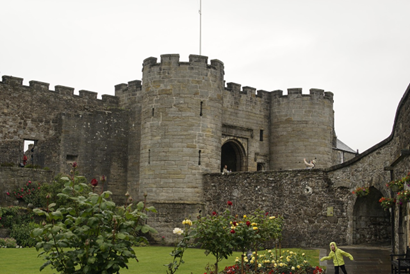
Stirling, 26 miles north-east of Glasgow, is another historic city, in the smaller central belt. As it lies on the River Forth, in its early years, it was important as a market town and trading post. Now, tourism is a major sector – with many visitors going to Stirling Castle, pictured, the historic Old Town, while Loch Lomond and The Trossachs National Park are both nearby. The city also has a thriving university – around one in five of the city’s 50,000 inhabitants is a student.
Paisley is also in the smaller central belt and is, by common consent, the largest place in Scotland which isn’t actually a city. It used to be a major centre for the country’s weaving industry, but the major mills have now all shut down. Nowadays, it’s a major public sector employer thanks to Renfrewshire Council, the University of the West of Scotland and the Paisley Campus of West College Scotland, and the Royal Alexandra Hospital; all of these are located in the town.
Scotland’s former capital Dunfermline is in the larger central belt, and it lies just to the north of the Firth of Forth. As well as an Abbey, it also has a museum devoted to Andrew Carnegie, the world-famous philanthropist who was born here. Finance and professional services are the major employers in Dunfermline, which was granted city status in 2022.
House Removals to Scotland with Hamiltons Removals
We can help with removals to central Scotland, the southern part of the country and the Highlands and Islands. Many of our major services can be found here, including our video surveys and our online quotes.
FAQS:
Q: How would Hamiltons Removals transport your possessions to Scotland?
A: Hamiltons have a wide selection of vehicles, from larger articulated lorries to medium-sized vehicles and smaller vans. If you are moving to Scotland from overseas, then we usually ship items to their destination – either as part of a dedicated service or a groupage one (where your items are shared with other consignments). For smaller, valuable items, we would recommend using air freight.
Q: What specialist commercial removals services can Hamiltons offer?
A: If you are moving your business to Scotland, then we can provide a range of bespoke commercial services. These include employee relocation, business storage, and equipment and computer removals. For more information, click here.
Q: Do Hamiltons have their own storage facilities?
A: Yes! We appreciate that storage can be very important during the moving process. You might need somewhere to keep your belongings if you are stuck in a property chain, or if you haven’t got room for some of them in your new property, but you haven’t decided what to do yet. And storage can be invaluable for short-term overseas moves because you can always reclaim them once you return home.
Along with conventional storage we also offer self-storage and have two Safe N Stored sites, at Harleston and Aldeby, close to the Norfolk/Suffolk border. We will ensure your possessions, however large or small, are kept safe and secure for however long you need.
« Back