


Blog
Removals to Trowse and Cringleford with Hamiltons Removals
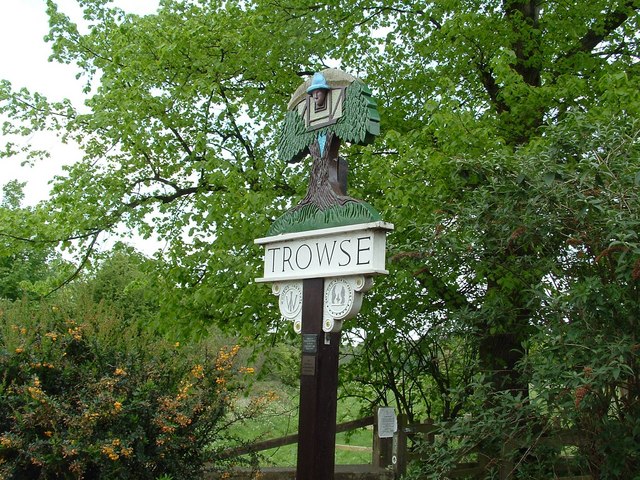
Although both lie in the shadow of the county capital of Norwich, the nearby villages of Cringleford and Trowse have much to offer in their own right. Here, East Anglia removal firm Hamiltons Removals look at the two locations for those considering moving to either of them.
Trowse
This village is historically called Trowse with Newton but these days is generally just shortened to Trowse. The name comes from the Anglo-Saxon word for treehouse, as many of its early homes were built on stilts to avoid flooding (the settlement lies on the banks of the River Yare).
It’s only about 1.5miles south-east of Norwich city centre but is still a distinct parish in its own right. Local residents have voted against being part of an expanded ‘Greater Norwich’.
Trowse was actually a model village built by an employer for his workforce, rather like Bournville near Birmingham, and Port Sunlight near Liverpool. The Norfolk version was built or extended for the workers at the nearby Colmans factory in the 18th century (the firm has since moved all its production, including of the famous mustard brand, out of Norwich). Some of the homes still have mustard-yellow front doors. The Colman family still own much of the land in and around Trowse.
These days the parish is expanding – almost doubling in size from 2001 to 2011, to 862 inhabitants, and it is expected to rise further with more developments in the pipeline. The former Norwich City football club training ground, which has since moved to Colney, has already been converted into a housing estate.
Much of the village is centred around the Common, although there are a number of outlying estates. The village has regained much of its peace and tranquility thanks to the Norwich southern bypass, which was completed in 1992. The road has taken a lot of traffic away from the village itself.
Trowse boasts a sports hall, a dry ski slope, plenty of woodland walks, two nearby lakes (one for conservation and one for water sports) and two pubs.
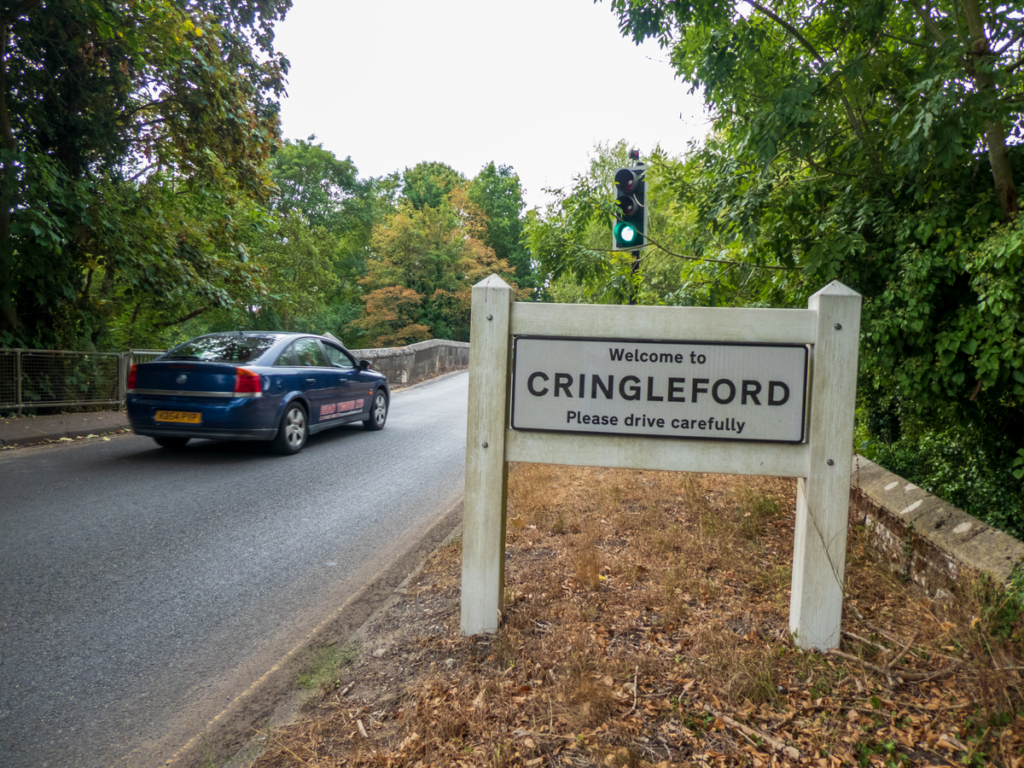
Cringleford
Like Trowse, Cringleford is also a village on the banks of the River Yare – its name comes from Old English and Old Norse and means a ford by a round hill. It lies 4.5miles to the south of Norwich city centre, although the outskirts of the city are a lot closer.
Prehistoric artefacts – mostly axes and arrowheads – have been uncovered on the site from both the Bronze and Iron Ages. Roman pottery and Anglo Saxon items have been unearthed in the village as well.
Cringleford was listed in the Domesday Book, although there were just 25 households there at the time. According to the latest census for which figures are available, (2011), it had a population of just under 3,000.
The parish church of St Peter dates from Norman times, while Cringleford Bridge (over the River Yare) was originally built in 1520. It has been rebuilt and restored many times due to a combination of extreme weather, flooding and accidents; the most recent major repair work was carried out in the 1970s.
It’s still a highly desirable place to live for those who don’t want the hustle and bustle of inner-city life, even though the A11 passes through part of the village. Cringleford has won the Norfolk village of the year competition six times, along with a host of other awards.
Removals to Trowse and Cringleford with Hamiltons Removals
Hamiltons Removals can help if you are interested in moving to either Trowse or Cringleford. We offer high-end removals to all parts of the county, from Norwich itself to the smallest of villages.
We provide a complete service all designed to make the whole process as simple as possible – we give you the choice of video surveys, online quotations or personal visits; we can also pack and unpack your items; or provide some high-quality packing materials and let you do the packing yourself.
If you have any questions about any of our services, just call us on 01379 855203.
Images: PAUL SHREEVE/ SEBASTIANDOE5//WIKIMEDIA COMMONS
Removals to Sheringham with Hamiltons Removals
Sheringham is an old-fashioned holiday resort in Norfolk with plenty of charm – rather like Southwold in Suffolk. For those considering moving house to Sheringham, Norfolk removal company Hamiltons Removals has compiled this handy guide to a town well known for its independent shops, award-winning beach and its heritage railway.
The History
Sheringham is mentioned in the Domesday Book – although then it was called Silingeham. It originally split into two parishes, Upper and Lower Sheringham – the former was a farming community, whereas the latter was the heart of the fishing community. It was fishing which helped the town grow – particularly crabs, lobsters and whelks. From the Victorian era onwards, a large proportion of the Sheringham fishermen’s catches were sold in the London fish markets, aided by the new railway lines.
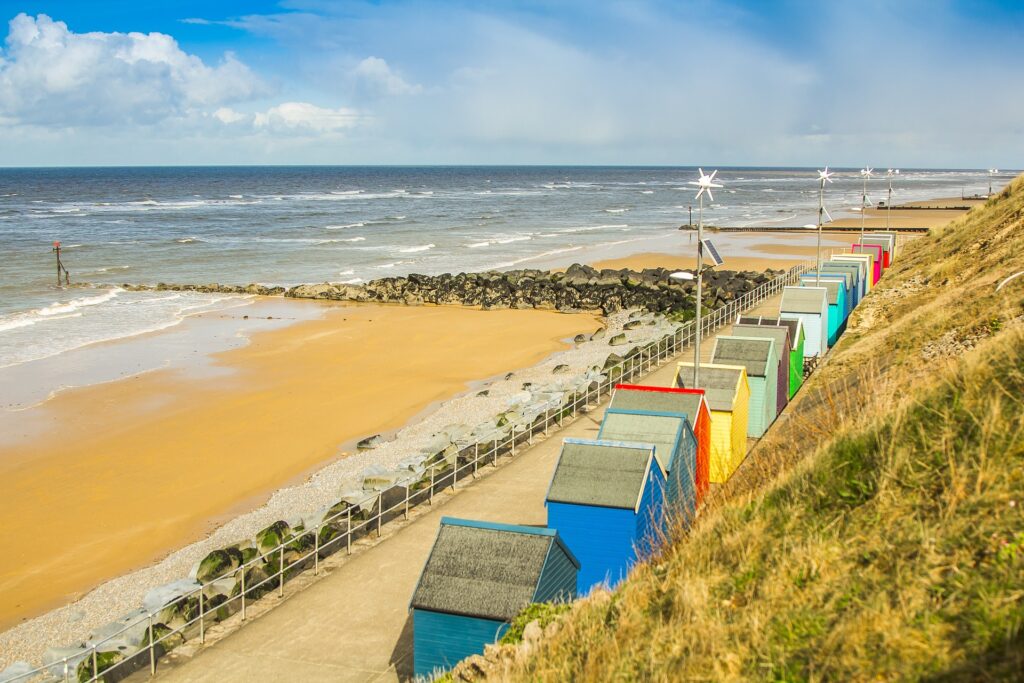
Nowadays, Sheringham, like its near-neighbour Cromer, is extremely popular with tourists and has a Blue Flag beach to boot (pictured above)
The Facilities
Sheringham is a very old-fashioned resort (perhaps more so than Cromer) and has a long High Street with plenty of old-fashioned independent shops. Ten years ago there was a long battle to keep Tesco out of the town – a battle that was eventually lost – but the resort still retains much of its olde worlde charm.
It has its own playhouse, the Little Theatre, which has a summer repertory season and a Christmas panto alongside various other shows and productions. Sheringham Museum, (now known as The Mo, short for Morag, who was the daughter of a prominent local family) is housed in former fisherman’s cottages behind the main street. The resort has a strong maritime history, and lifeboats figure strongly in its past – the town still has a station, although for the past 30 years it’s been used for inshore operations only.
Transport
The town has not one but two railway stations. Greater Anglia runs the mainline station, which operates services to Cromer and Norwich as part of the Bittern Line. There is also a heritage steam line in operation – the North Norfolk Railway, also known as the Poppy Line.
This runs between Sheringham and Holt and the platform is beyond the main station. As well as steam (and diesel) services, there are a number of special events throughout the year – check out their website for more details.
The main road route is the A148, which connects the town with King’s Lynn and Cromer (and onto Norwich via the latter and the A140) and runs to the south of the town. There are also regular bus services to Cromer, Aylsham and Norwich. The nearest airport is Norwich, 25 miles away; it’s comparatively easy to get to as it’s on the north side of the city.
House Prices
The average house price in Sheringham last year was just under £370,000, reports property website Rightmove. The bulk of these were detached properties, which usually sold for in excess of £450,000; however, the average was below this thanks to the number of semi-detached homes and flats.
A lot of homes use flint – a plentiful building material which is also common across North Norfolk. And many of the houses date from Victorian times – the rail line not only helped the fishing industry expand, but it also saw a rise in homebuilding.
While Sheringham’s house prices are relatively high for the county (2021 Land Registry data compiled by estate agents Savills said the average was one of the highest in Norfolk), you are paying for a coastal location – and prices are still cheaper than many places in the East of England as a whole.
Removals to Sheringham with Hamiltons Removals
At Norfolk removal company Hamiltons Removals, we can help if you are considering moving house to Sheringham. We offer a high-end service, with a commitment to quality and personal service; we can pack and unpack your items for you, and clean your old home, to take a lot of the stress out of moving day.
Our base on the Norfolk/Suffolk border means we can offer a truly local service, whether you want to move to Sheringham and Cromer in the north, King’s Lynn in the west, Diss in the south, or Norwich itself.
If you’d like to know more about our removals to Norfolk, follow this link or call us on 01379 855203.